
What builds up in your body: AGEs
They can build up even if your blood sugar is normal and you don't eat many sweets. We measure the AGEs that increase little by little with age, cooking methods, and lifestyle without a blood draw using skin autofluorescence, and look at them together with other indicators such as blood sugar and lipids.
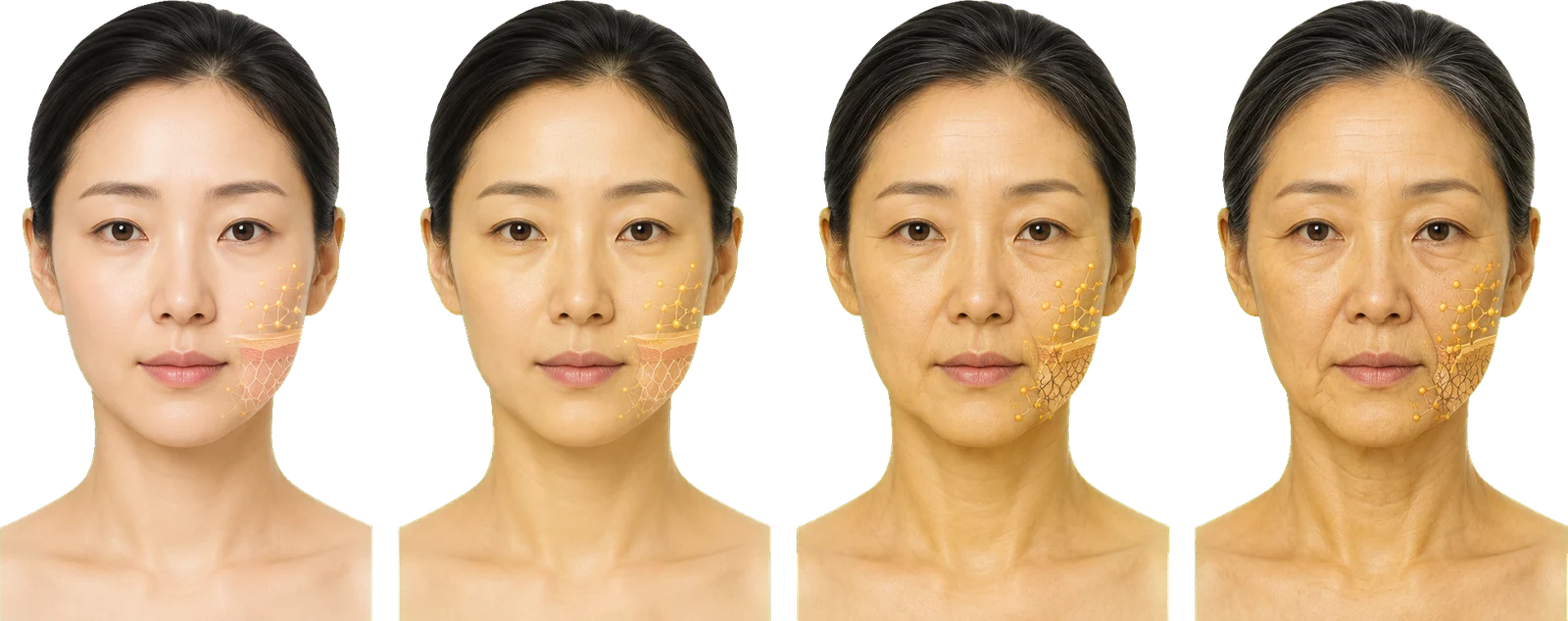
AGEs (advanced glycation end-products, sometimes called glycotoxins) are substances formed when sugar binds to proteins or fats in the body. They are produced inside the body and also come in through food. Once formed, they are cleared slowly, so they build up little by little over time.
The AGE test is a reference test for risk assessment; it is not used to confirm or rule out any specific disease.
What are AGEs
They build up in everyone with age.
What matters is how fast they build up.

Where do AGEs come from?
There are two main routes: those made inside the body, and those that come in through food.
Made inside the body
They form as sugar in the blood binds to proteins and fats. The longer high blood sugar continues, the more are made, and they naturally increase with age.
Taken in through food
Many form in food cooked at high temperatures without water, such as grilling, frying, and stir-frying. Browned surfaces, processed meats, and fried foods tend to contain especially high amounts.
Lifestyle factors also play a role
Smoking is a major factor that increases AGEs. We also look at lifestyle habits that affect metabolism, such as sleep, activity level, and weight changes.
Why look at them?
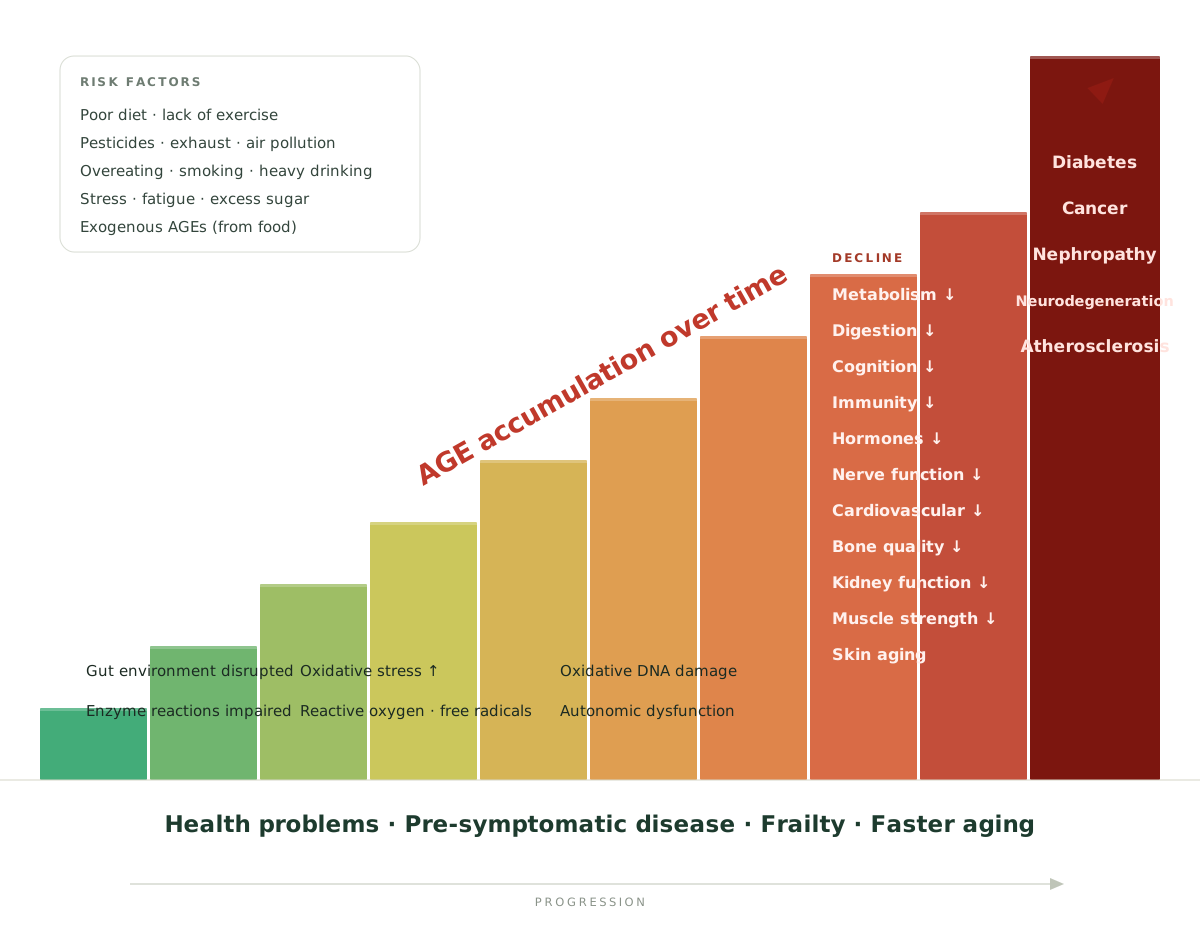
Once AGEs build up, they stay for a long time. Many studies have reported associations with the following changes.
Changes reported to be associated in studies
- Blood vessels — changes in the elasticity of vessel walls
- Inflammation — chronic inflammatory responses in the body
- Skin — collagen changes and loss of elasticity
- Metabolism — progression of diabetes and its complications
Who might consider this test?
- People who want to check how fast they are aging, in numbers
- People who feel that the elasticity of their skin and blood vessels is not what it used to be
- People who want to see the results of their efforts not by feel but by a measurable indicator
- People whose fasting blood sugar or HbA1c is at a borderline level or higher
- People starting weight and metabolic management
How measurement and consultation proceed
We first hear about your lifestyle and medical history
We check your eating habits and favorite cooking methods, whether you smoke, your medications, and underlying conditions such as diabetes, high blood pressure, and dyslipidemia.
We measure the degree of AGE accumulation
It is measured by skin autofluorescence: light is shone on the skin and the fluorescence given off by AGEs in the skin is read. No blood draw is needed. Age, skin color, smoking, kidney function, and UV exposure can affect the result, so we take them into account.
We interpret it together with other indicators
We look at blood sugar, HbA1c, and lipid levels together with weight and waist circumference, and see how well the measured value explains your current condition.
We make a diet and lifestyle plan
We adjust cooking methods, meal composition, an eating order that keeps blood sugar from rising sharply, and activity level to fit your daily life.
We check again after some time
AGEs are a slowly changing indicator, so we measure again after a period of time to see the trend. The degree of change differs from person to person.
Ways to reduce them in daily life
Studies show that the amount of AGEs in food varies greatly with the cooking method, even for the same ingredients.
Cook with water
Try using more cooking methods that use water and lower temperatures, such as steaming, boiling, simmering, and soups, rather than grilling or frying. Marinating meat in vinegar or lemon juice before cooking is another option.
Let blood sugar rise slowly
Eating vegetables and protein first and carbohydrates later, and cutting back on refined carbohydrates and sugary drinks, may help reduce blood sugar swings.
Quit smoking and keep moving
Smoking is a major factor that increases AGEs. Regular activity and enough sleep also help manage blood sugar and metabolism.
- Uribarri J, et al. Advanced glycation end products in foods and a practical guide to their reduction in the diet. J Am Diet Assoc. 2010;110(6):911-916.
- Meerwaldt R, et al. Simple non-invasive assessment of advanced glycation endproduct accumulation. Diabetologia. 2004;47(7):1324-1330.
- Dietary Advanced Glycation End-Products and Colorectal Cancer Risk in the European Prospective Investigation into Cancer and Nutrition (EPIC) Study. 2021.
- Miller, et al. Aging promotes a RAGE-dependent increase in breast cancer metastasis. Commun Biol. 2026;9:661. (mouse study)
On skin autofluorescence measurement · Koetsier M, et al. Diabetes Technol Ther. 2010;12(5):399–403 · Yue X, et al. Diabet Med. 2011;28:818–823 · Isami F, et al. J Int Med Res. 2018;46 · Wolffenbuttel BHR, et al. Front Endocrinol. 2025 · Martínez-García I, et al. J Clin Med. 2025;14(2):474
Frequently asked questions
What are AGEs?
Advanced glycation end-products (AGEs) are often called "glycotoxins." They are substances formed when sugar binds to proteins or fats in the body; they are produced inside the body and also come in through food. Once formed, they are cleared slowly, so they build up little by little over time.
How are AGEs measured?
They are measured by skin autofluorescence: light is shone on the skin and the fluorescence given off by AGEs in the skin is read. No blood draw is needed. Age, skin color, smoking, kidney function, and UV exposure can affect the result. We explain the time required and preparation when you book.
If AGEs build up, will I get cancer?
That cannot be said. Laboratory studies suggest that inflammatory signals through the receptor that AGEs bind to (RAGE) may be involved in cancer progression, but a causal link showing that AGE accumulation causes cancer in humans has not been established. In a study following about 450,000 people in Europe, eating more AGEs in food was not associated with a higher risk of colorectal cancer. However, the amount eaten and the amount accumulated in the body are different measures. AGE levels alone cannot be used to judge whether you have cancer or your cancer risk, and there is not yet enough evidence that lowering AGEs with IV drips or supplements prevents cancer.
If my result is high, do I need treatment right away?
The measured value is a reference indicator for looking at your condition and does not diagnose a disease by itself. We interpret it together with blood sugar, HbA1c, lipids, and other values, and make a management plan focused on adjusting diet and lifestyle. Any further evaluation needed is decided at the consultation.
Can I reduce AGEs through food?
Studies show that the amount of AGEs in food varies greatly with the cooking method. Cooking with water, such as steaming, boiling, or simmering, may help more than high-temperature dry-heat cooking such as grilling or frying. However, how much an individual's measured value changes differs from person to person.
Can AGEs build up even if my blood sugar is normal?
Yes, they can. They naturally increase with age, and lifestyle factors such as food cooked at high temperatures and smoking also play a role. Even with normal blood sugar, this is a reason to look at your eating habits and lifestyle factors as well.
More about AGEs
More information about AGEs is available on Yonsei DANA ENT Clinic's AGEs information site (in Korean).
See more on ages.kr (Korean) ↗AGEs and blood sugar —
let's look at them together
Bringing your recent blood test results (blood sugar, HbA1c, lipids) and your current medications helps the visit.
- Phone
- 0507-1384-5075
- Address
- Rooms 322–323, 3F Lemeilleur Jongno Town, 19 Jongno, Jongno-gu, Seoul (Jonggak Stn Exit 1 · Gwanghwamun Stn Exit 4)
- Related care
- GLP-1 Weight Management Clinic · BMI calculator